AI in Healthcare
AI in Healthcare: How Artificial Intelligence Is Saving Lives
Introduction
Artificial Intelligence (AI) isn’t just changing the way we live and work — it’s transforming how we heal.
In 2025, AI is saving lives every single day. It’s helping doctors diagnose diseases faster, predicting patient risks before symptoms appear, and even discovering new drugs in record time.
From hospitals to home care, AI is making healthcare smarter, faster, and more accurate. In this article, we’ll explore the most important ways AI is revolutionizing medicine — and how it’s reshaping the future of health.
What Is AI in Healthcare?
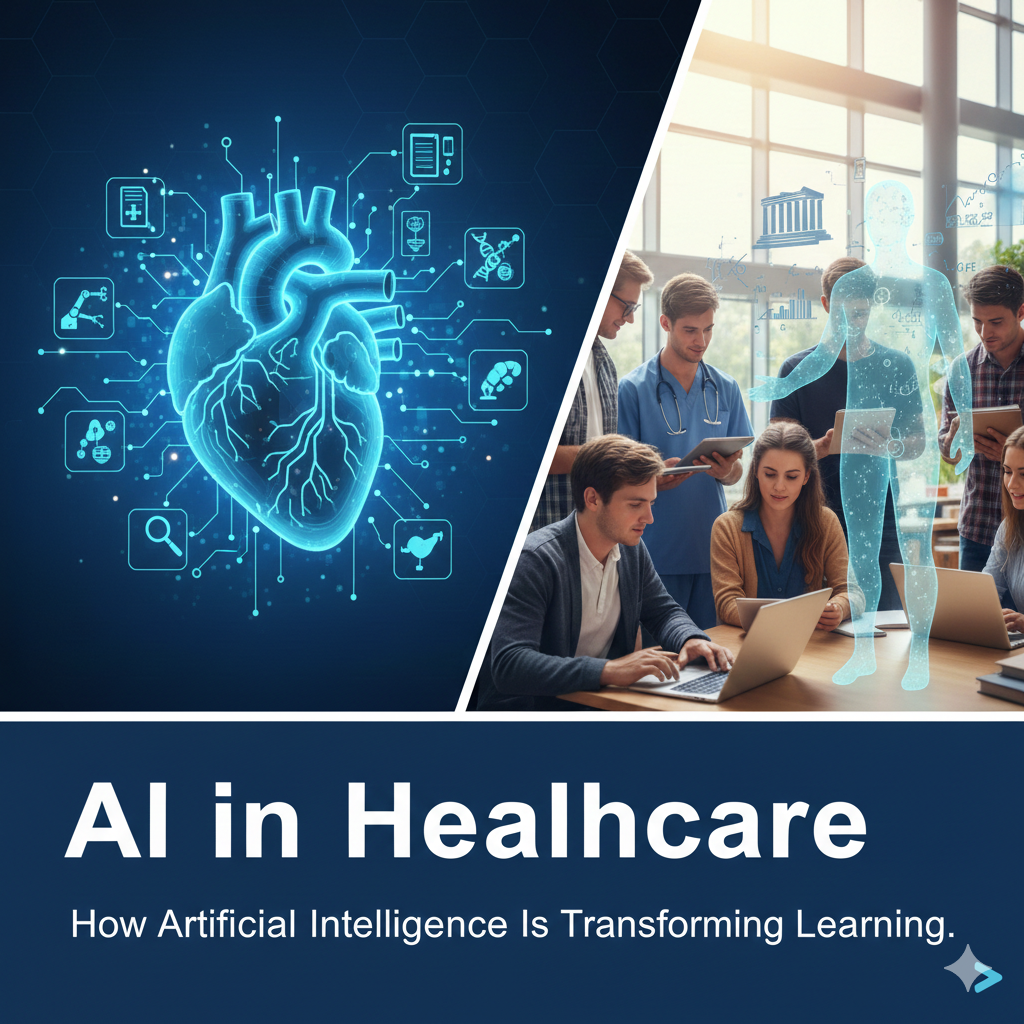
AI in healthcare refers to the use of intelligent computer systems that can analyze medical data, recognize patterns, and assist in decision-making.
It combines technologies like:
- Machine Learning (ML): Learning from data to predict outcomes
- Natural Language Processing (NLP): Understanding medical notes or reports
- Computer Vision: Interpreting medical images (X-rays, MRIs)
- Robotics: Assisting in surgery or patient monitoring
Simply put:
AI helps doctors make better decisions, faster — improving care and saving lives.
1. AI for Faster and More Accurate Diagnosis
One of the biggest challenges in healthcare is diagnosing diseases early and accurately. AI is helping solve this problem.
How it works:
AI systems are trained on thousands — even millions — of medical images and patient records. They learn to detect subtle signs that humans might miss.
Examples:
- Google Health’s AI detects breast cancer in mammograms more accurately than some radiologists.
- DeepMind’s AI can identify over 50 eye diseases from retinal scans.
- PathAI helps pathologists detect cancer cells faster and with fewer errors.
Pro Tip: AI doesn’t replace doctors — it supports them, acting like a “second pair of eyes” that never gets tired.
2. AI in Drug Discovery and Development
Developing a new drug can take 10–15 years and cost billions. AI is changing that by dramatically speeding up the process.
How AI helps:
- Predicting drug effectiveness: AI analyzes molecular structures and predicts which compounds will work.
- Reducing trial time: AI models simulate how drugs interact with the human body.
- Identifying new treatments: AI finds new uses for existing drugs (known as “drug repurposing”).
Real-world example:
During the COVID-19 pandemic, BenevolentAI identified a potential treatment (Baricitinib) in just days — a process that usually takes months.
Pro Tip: AI doesn’t replace scientists — it accelerates their research, helping them test millions of possibilities in a fraction of the time.
3. Personalized Medicine with AI
Traditional medicine treats patients using general guidelines. But in reality, every person’s body is different.
AI allows for personalized medicine — treatment plans tailored to each individual’s genetics, lifestyle, and medical history.
How it works:
- AI analyzes genetic data, medical records, and lifestyle factors.
- It predicts which treatments will work best for a specific person.
- Doctors use these predictions to customize care plans.
Example:
- IBM Watson for Oncology analyzes medical literature and patient records to recommend personalized cancer treatments.
Pro Tip: Personalized medicine powered by AI can reduce side effects and improve recovery outcomes significantly.
4. AI in Medical Imaging and Radiology
AI is a game-changer in radiology — helping doctors interpret medical images faster and with greater accuracy.
Applications include:
- Detecting tumors or fractures in X-rays
- Identifying early-stage cancers in MRIs
- Recognizing heart disease from CT scans
Example:
AI tools like Aidoc and Qure.ai analyze scans and alert doctors to urgent cases — saving critical minutes in emergencies.
Pro Tip: AI can process thousands of medical images in minutes, allowing doctors to focus on patient care instead of paperwork.
5. AI-Powered Virtual Health Assistants
Virtual assistants aren’t just for your phone — they’re now being used in hospitals and clinics to support patients.
What they do:
- Answer basic health questions
- Remind patients to take medications
- Monitor symptoms remotely
- Schedule appointments automatically
Examples:
- Ada Health: A personal AI-powered symptom checker.
- Buoy Health: Helps patients understand their symptoms and find care.
Pro Tip: Virtual assistants improve accessibility — especially for patients in remote or underserved areas.
💬 6. AI in Predictive Healthcare
AI can predict health risks before symptoms appear — allowing doctors to take preventive action.
How it works:
AI models analyze patterns in patient data — age, genetics, blood pressure, and lifestyle habits — to forecast potential diseases.
Examples:
- Predicting heart attacks by analyzing ECG data.
- Detecting diabetes risk based on lifestyle factors.
- Predicting hospital readmissions to reduce costs.
Pro Tip: Predictive AI can save lives — early detection often means easier treatment and better recovery.
7. Robotics and AI in Surgery
AI-powered robots are now assisting surgeons with precision, accuracy, and stability.
How it helps:
- Minimally invasive surgeries with smaller incisions
- Steady, fatigue-free performance
- Real-time data analysis during operations
Example:
- The da Vinci Surgical System uses AI-assisted robotic arms to perform complex surgeries with micro-precision.
Pro Tip: AI-guided robots enhance surgeons’ skills — not replace them. The combination of human expertise and machine precision delivers the best results.
8. Administrative and Operational Efficiency
Beyond medicine, AI is also transforming how healthcare systems run.
AI helps hospitals:
- Automate patient record management
- Schedule staff and appointments efficiently
- Reduce billing and insurance errors
Example:
- Olive AI helps hospitals automate administrative workflows, saving time and reducing costs.
Pro Tip: AI cuts down paperwork, so healthcare professionals can focus on what matters most — caring for patients.
9. Ethical and Privacy Considerations
While AI in healthcare offers huge potential, it also raises important ethical questions.
Key concerns:
- Data privacy: Patient information must be kept secure.
- Bias: AI models trained on limited data can lead to unequal treatment outcomes.
- Transparency: Doctors need to understand how AI systems make their decisions.
Healthcare organizations must use ethical AI frameworks to ensure fairness, accuracy, and trust.
Pro Tip: Patients should always know when AI is being used in their care — transparency builds confidence.
10. The Future of AI in Healthcare
The future of medicine will be powered by human-AI collaboration.
We can expect:
- Real-time AI diagnostics integrated into wearables
- AI doctors assisting rural and remote communities
- Faster global response to future pandemics
- Smarter, personalized treatments for every patient
AI won’t replace doctors — it will make them superhuman, enhancing their ability to save lives with data-driven precision.
Conclusion
Artificial Intelligence is redefining healthcare — making it faster, smarter, and more personal.
From diagnosing diseases early to predicting future risks, AI is saving lives every day.
The key is not to fear AI, but to embrace it responsibly — as a partner that helps doctors, nurses, and researchers deliver better care to everyone.
In 2025 and beyond, AI isn’t replacing healthcare professionals — it’s giving them superpowers.
Because the future of medicine isn’t man or machine — it’s man and machine, healing together.