AI in Finance
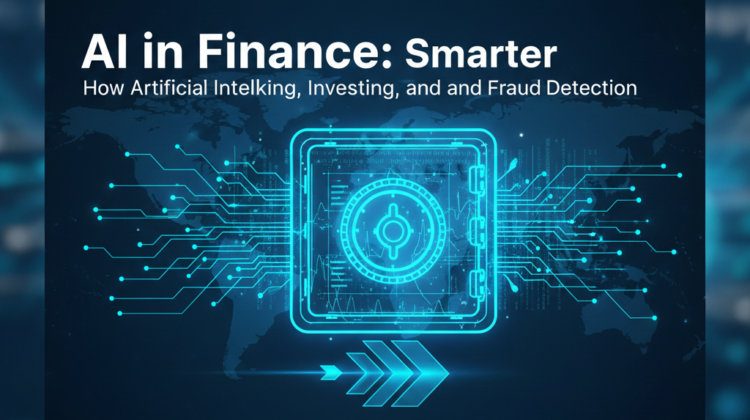
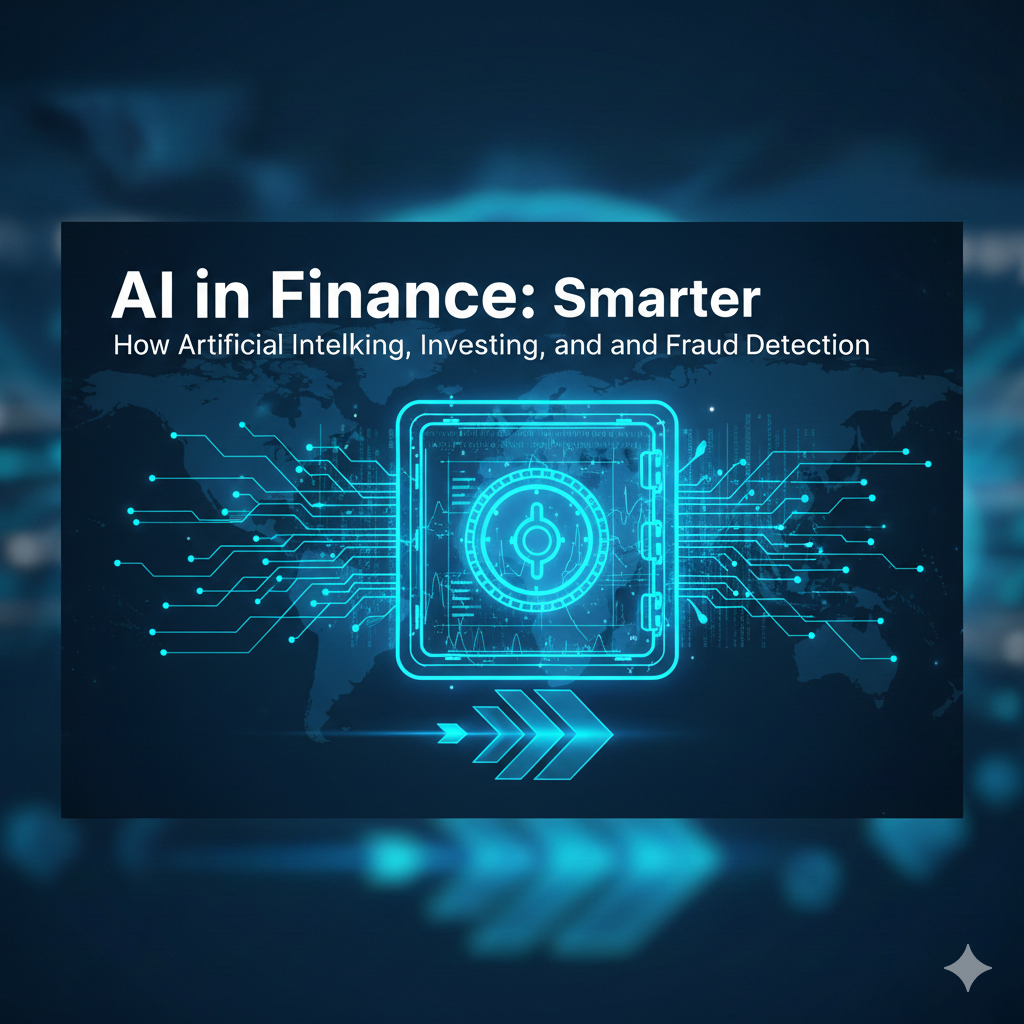
AI in Finance: Smarter Banking, Investing, and Fraud Detection
Focus Keywords:
AI in finance, AI banking, AI investment, AI fraud detection, financial technology
Introduction
The world of finance is evolving faster than ever — and Artificial Intelligence (AI) is leading the transformation.
In 2025, AI is at the core of everything from banking apps that predict spending habits to investment bots that analyze markets in seconds. It’s making finance smarter, faster, safer, and more personal.
AI is not just changing how we manage money — it’s redefining how financial institutions serve
customers, detect fraud, and make strategic decisions.
Let’s explore how AI is reshaping the financial industry and why it’s become a must-have technology for banks, investors, and consumers alike.
What Is AI in Finance?
AI in finance refers to the use of intelligent algorithms and machine learning systems to analyze data, automate decisions, and improve financial processes.
It’s used in:
- Banking (customer service, credit scoring)
- Investment (robo-advisors, portfolio management)
- Fraud detection (real-time risk analysis)
- Accounting (automation and analytics)
Simply put:
AI helps financial institutions make smarter, faster, and more secure decisions — while providing a better experience for customers.
1. AI in Banking: Smarter Customer Service
AI has completely changed the way banks interact with customers.
Examples:
- Chatbots and virtual assistants like those used by Bank of America (Erica) or HSBC (Amy) answer questions 24/7.
- AI-powered apps help customers check balances, plan budgets, and even warn them before they overspend.
- Natural language processing (NLP) allows customers to talk to banking apps using voice commands — just like Siri or Alexa.
Benefits:
- 24/7 instant support
- Reduced customer service costs
- Personalized recommendations
Pro Tip: Banks use AI to understand your spending behavior and suggest financial products that truly fit your needs.
2. Fraud Detection and Prevention
One of the most critical uses of AI in finance is fraud detection.
Traditional fraud detection systems rely on rule-based checks — but fraudsters evolve faster than those rules. AI, however, learns continuously.
How it works:
- AI systems monitor millions of transactions in real time.
- They detect unusual behavior (like a sudden large withdrawal).
- Machine Learning models flag suspicious activities instantly.
Real-world examples:
- Mastercard uses AI to detect and stop fraud in milliseconds.
- PayPal’s AI system prevents thousands of fake transactions daily.
Pro Tip: AI doesn’t just detect fraud — it predicts it by recognizing subtle patterns that humans might miss.
3. AI in Investment and Wealth Management
AI has revolutionized how people invest.
Robo-Advisors
AI-driven platforms like Betterment, Wealthfront, and SoFi Invest automatically manage portfolios using algorithms.
They analyze your:
- Risk tolerance
- Investment goals
- Market trends
Then they automatically invest and rebalance portfolios for maximum returns.
Hedge Funds and Algorithmic Trading
Large investment firms use AI to analyze massive market data in real time.
AI identifies patterns, news sentiment, and market shifts — executing trades faster than any human could.
Pro Tip: AI can process global market data in seconds, helping investors make data-driven, emotion-free decisions.
4. AI for Credit Scoring and Risk Assessment
Traditional credit scoring relies on a narrow set of metrics like income or past credit history. AI goes much deeper.
How AI enhances risk assessment:
- It analyzes hundreds of data points — spending behavior, online patterns, and even social signals.
- It creates more accurate credit profiles, especially for people with limited financial histories.
Example:
- Zest AI and Upstart use Machine Learning to evaluate borrowers more fairly and accurately.
Pro Tip: AI-based credit scoring allows more people — especially in emerging markets — to access financial services.
5. AI in Accounting and Financial Planning
AI tools now automate many accounting tasks that once took hours.
Examples:
- QuickBooks AI categorizes expenses automatically.
- Xero AI generates reports and reconciles transactions.
- Fyle AI detects duplicate receipts and potential fraud.
AI also helps financial planners forecast revenue, track expenses, and predict future trends.
Pro Tip: Small businesses can use AI-powered accounting tools to save time and reduce costly errors.
6. Predictive Analytics and Market Forecasting
AI doesn’t just analyze past data — it predicts future trends.
Using predictive analytics, financial institutions can:
- Forecast market movements
- Anticipate customer needs
- Optimize pricing and product offerings
Example:
Banks use AI to predict when customers might need a loan or when investors might sell stocks — allowing for proactive engagement.
Pro Tip: Combine AI forecasting tools with human strategy — together, they make smarter investment decisions.
7. Personal Finance Management (PFM)
AI is now your personal financial coach.
Apps like:
- Cleo and Plum track your spending habits.
- YNAB (You Need A Budget) uses AI to suggest budgeting goals.
- ChatGPT-based financial assistants help users plan savings and investments.
These tools analyze your income, expenses, and goals — then guide you to make smarter financial choices.
Pro Tip: AI can help automate savings by predicting your monthly spending patterns and transferring leftover funds automatically.
8. AI in Insurance (Fintech + Insurtech)
AI is helping insurance companies speed up claims, detect fraud, and offer customized plans.
How it works:
- AI chatbots guide customers through the claims process.
- Computer vision analyzes accident photos to estimate damage costs.
- Predictive models assess risk for pricing policies accurately.
Example:
- Lemonade Insurance uses AI bots to process claims in under 3 minutes.
Pro Tip: AI helps insurers cut paperwork and offer more transparent, faster services to policyholders.
9. Compliance and Regulatory Monitoring
Finance is one of the most heavily regulated industries — and AI is helping banks stay compliant.
AI systems monitor transactions, detect suspicious activity, and generate compliance reports automatically.
Example:
- Ayasdi AI helps global banks meet anti-money-laundering (AML) regulations.
- AI tools detect and report anomalies faster than manual teams.
Pro Tip: AI-powered compliance systems help avoid costly penalties while maintaining trust and transparency.
10. Challenges of AI in Finance
While AI offers massive benefits, it also brings challenges:
- Data privacy: Sensitive financial data must be protected.
- Bias: Biased data can lead to unfair lending or investment decisions.
- Transparency: AI models should be explainable and accountable.
- Cybersecurity: Hackers are also using AI to launch sophisticated attacks.
Financial institutions must balance innovation with ethics, fairness, and security.
Pro Tip: Always use AI tools from trusted providers that comply with financial regulations like GDPR or ISO 27001.
11. The Future of AI in Finance
AI will continue to evolve — making financial services faster, more inclusive, and more personalized.
Expect to see:
- Voice banking: Conversational AI for transactions.
- Hyper-personalized investments: AI managing portfolios tailored to your goals.
- Autonomous finance: Fully automated budgeting and investing.
- AI-driven ESG analysis: Evaluating environmental and social impact of investments.
The future of finance will be AI-powered but human-guided — with machines doing the heavy lifting and humans making the final judgment calls.
Conclusion
Artificial Intelligence is reshaping finance — from how we save and spend to how banks operate and protect us.
It’s making banking more personal, investing more intelligent, and fraud detection more precise.
AI won’t replace financial professionals — it’s giving them superpowers to analyze faster, predict better, and serve customers smarter.
In 2025 and beyond, the smartest money isn’t just in the market — it’s in the machines that make markets smarter.