
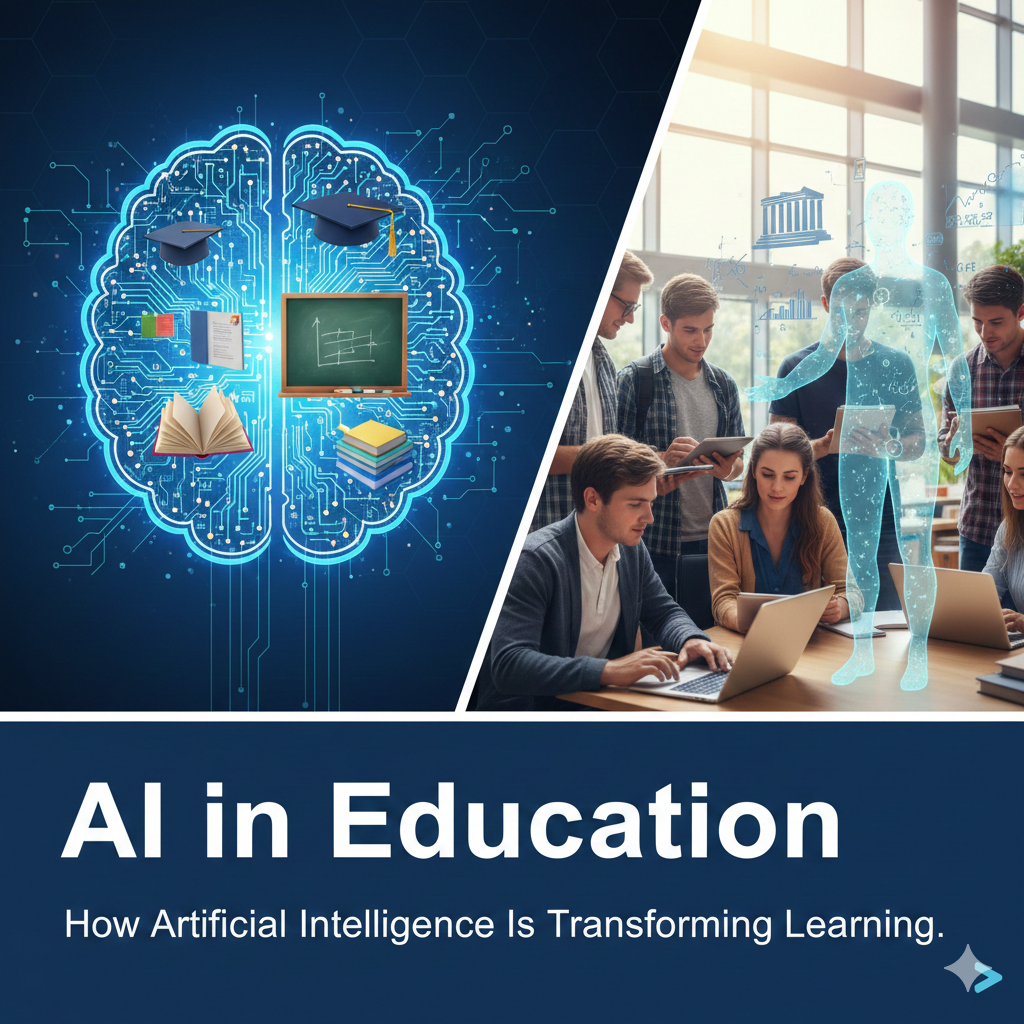
AI in Education: How Artificial Intelligence Is Transforming Learning
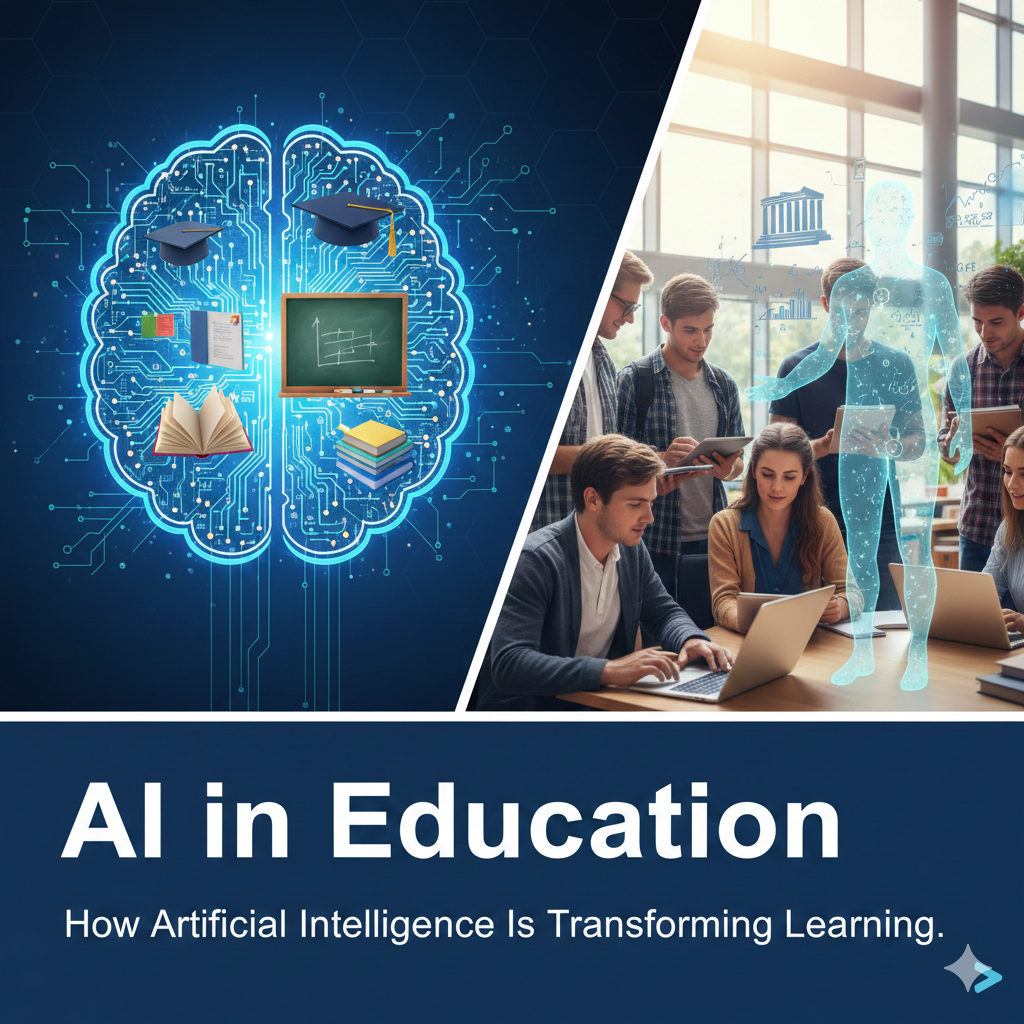
Introduction
Education has always been about one thing — unlocking human potential. But in 2025, a new partner has entered the classroom: Artificial Intelligence (AI).
AI isn’t here to replace teachers — it’s here to empower them. It’s helping educators teach smarter, helping students learn faster, and making education more accessible than ever before.
From smart tutoring systems to personalized lesson plans, AI is transforming how knowledge is delivered, absorbed, and applied.
In this article, we’ll explore how AI is changing education — and why it’s creating a smarter, more inclusive world of learning.
What Is AI in Education?
AI in education means using intelligent systems that can analyze data, adapt to student needs, and assist in teaching and learning processes.
In simple terms, AI helps make learning:
- Personalized: Tailored to each student’s strengths and weaknesses.
- Efficient: Reducing time spent on grading and administration.
- Engaging: Turning lessons into interactive and dynamic experiences.
Think of AI as a digital co-teacher — always available, always learning, and always ready to help.
1. Personalized Learning for Every Student
One of AI’s biggest contributions to education is personalization.
Every student learns differently — some are visual learners, others prefer hands-on or auditory methods. Traditional classrooms struggle to cater to all learning styles, but AI can.
How it works:
AI analyzes each student’s performance, learning speed, and preferences. Then, it customizes content and exercises to match their needs.
Example:
- DreamBox Learning adapts math problems based on how a student answers.
- Duolingo uses AI to adjust difficulty levels for language learners.
Pro Tip: Personalized learning increases engagement and retention because students learn in the way that suits them best.
2. AI-Powered Tutoring and Support
AI-powered tutoring systems give students instant, one-on-one help anytime, anywhere.
These digital tutors don’t replace teachers — they supplement them by offering additional support after class hours.
Examples:
- Socratic (by Google): Explains homework problems step-by-step.
- Quizlet AI Tutor: Helps students study and test themselves effectively.
- Khanmigo (by Khan Academy): An AI-powered teaching assistant that helps students understand complex concepts.
AI tutors are patient, available 24/7, and can explain concepts in multiple ways until the student truly understands.
Pro Tip: AI tutors work especially well for remote learners and students who need extra practice.
3. Automated Grading and Teacher Assistance
Teachers spend hours grading assignments and giving feedback — tasks that AI can handle in minutes.
How AI helps educators:
- Automatic grading: Especially for objective questions like multiple-choice or true/false.
- Essay evaluation: AI tools like Gradescope analyze writing structure, grammar, and even argument strength.
- Feedback generation: AI can provide instant, detailed feedback to students.
This gives teachers more time for what really matters — teaching and mentoring, not paperwork.
Pro Tip: Teachers can combine AI grading with personal comments for a human touch.
4. Smart Content Creation
AI can now create educational materials like quizzes, lesson summaries, study guides, and even textbooks.
Examples:
- ChatGPT can generate explanations, examples, and reading materials in seconds.
- Knewton and Coursera AI recommend specific resources based on student performance.
AI also helps translate and localize educational materials, making learning accessible to students around the world — regardless of language.
Pro Tip: Teachers can use AI tools to prepare lesson plans and presentations more efficiently.
5. Language Learning Made Easier
AI is transforming how people learn new languages.
How it works:
AI systems use speech recognition, natural language processing (NLP), and adaptive feedback to teach pronunciation, grammar, and vocabulary.
Popular examples:
- Duolingo: Adapts lessons based on user progress and errors.
- ELSA Speak: Uses AI to analyze your accent and pronunciation.
- Rosetta Stone AI: Creates personalized practice sessions.
Pro Tip: AI language tools are great for learners who want real-time corrections and continuous practice.
6. Virtual Classrooms and AI Assistants
AI is making remote learning more interactive and engaging.
With AI-powered virtual classrooms, teachers can manage large groups, track participation, and even detect when students lose focus.
Examples:
- Microsoft Teams AI tracks engagement and generates insights for teachers.
- Zoom AI Companion summarizes lessons and identifies key takeaways.
- Google Classroom + AI tools automatically organize assignments and grades.
Pro Tip: Combine AI virtual assistants with video conferencing for smoother online teaching.
7. Data-Driven Insights for Teachers and Schools
AI doesn’t just help students — it also helps educators and administrators make smarter decisions.
How it helps:
- Tracks student performance across subjects.
- Identifies struggling students early.
- Predicts dropouts and suggests interventions.
Example:
IBM Watson Education analyzes learning data to help teachers adjust their approach for each student.
Pro Tip: Data-driven insights allow schools to focus resources where they’re most needed.
8. Accessibility and Inclusive Education
AI is helping make education accessible for students with disabilities or learning challenges.
Examples:
- Speech-to-text tools (like Google Live Transcribe) help hearing-impaired students.
- Text-to-speech AI (like Microsoft Immersive Reader) supports visually impaired learners.
- AI captioning makes video lessons inclusive for everyone.
AI is turning education into a space where no learner is left behind.
Pro Tip: Teachers can use AI-powered accessibility tools to reach diverse learners effectively.
9. Ethical and Privacy Considerations
While AI in education brings amazing benefits, it also comes with challenges.
Key concerns:
- Data privacy: Student information must be protected.
- Bias: AI systems must treat all students fairly.
- Teacher dependence: Overreliance on AI can limit personal interaction.
Schools must ensure that AI is used ethically and transparently, keeping humans in control of decisions.
Pro Tip: Use AI as a teaching assistant, not a replacement for real educators.
10. The Future of AI in Education
In the future, AI will make education even more personalized, global, and engaging.
We can expect:
- AI mentors that guide students throughout their entire academic journey.
- Virtual classrooms that feel as real as physical ones (powered by AR/VR + AI).
- Lifelong learning assistants that track progress from school to career.
- Real-time translation AI, allowing global classrooms without language barriers.
AI will not replace human teachers — it will amplify their impact, helping them reach every learner effectively.
Conclusion
Artificial Intelligence is reshaping education — not by taking control, but by enhancing human potential.
It helps teachers teach better, students learn faster, and schools operate smarter.
AI isn’t replacing classrooms — it’s redefining them. In 2025 and beyond, learning will be:
- More personalized
- More accessible
- More engaging
Because education’s future isn’t man or machine — it’s humans and AI learning together.